screening search
Turning a broken search into a commercial surface for B2B content licensing
00
PROBLEM
Screening is Globo's B2B platform for licensing telenovelas, series, and unscripted formats to international broadcasters and distributors. Every search on the platform is a potential licensing conversation worth six or seven figures. The MVP shipped without a structured UX process. Design joined after launch. I led the redesign — diagnostic, research, proposal, and handoff — working with one developer lead and one PM.
OUTCOMES
Zero-result rate: ~85% → ~17% Search-to-detail conversion: +77%
Screening is Globo's B2B platform for licensing telenovelas, series, and unscripted formats to international broadcasters and distributors. Every search on the platform is a potential licensing conversation worth six or seven figures.
The MVP shipped without a structured UX process. Design joined after launch.
I led the redesign — diagnostic, research, proposal, and handoff — working with one developer lead and one PM.
The diagnostic
Searching "Telenovela" — one of Globo's most iconic and commercially valuable formats — returned zero results.
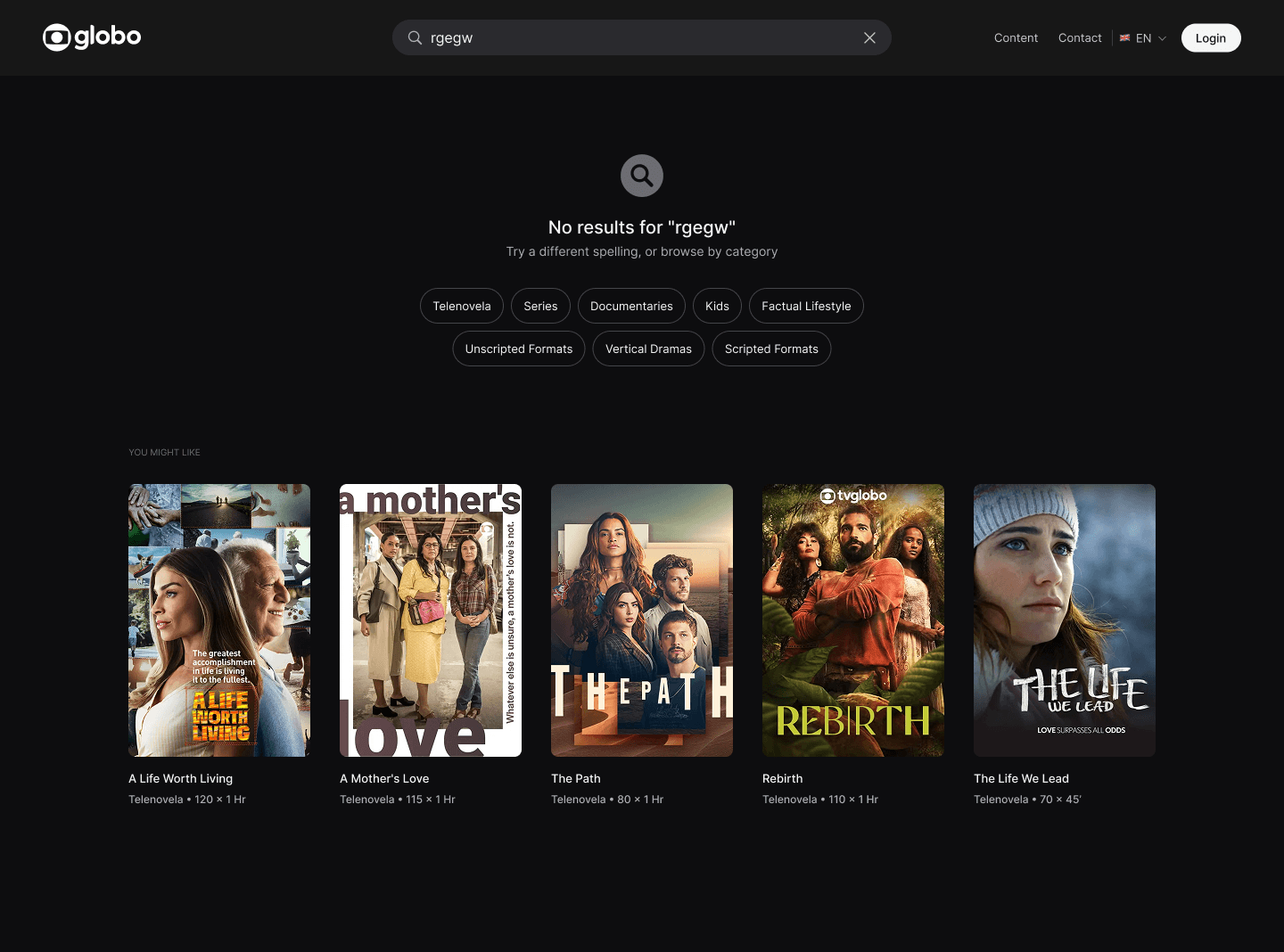
The system matched only exact strings. The platform cataloged those titles internally as "Novela." Users searching for the industry-standard term hit a wall with no fallback, no suggestion, no path forward.
This wasn't a UX inconvenience. For international buyers running market evaluations under tight cycles, a dead-end search means moving to the next platform — and not coming back.
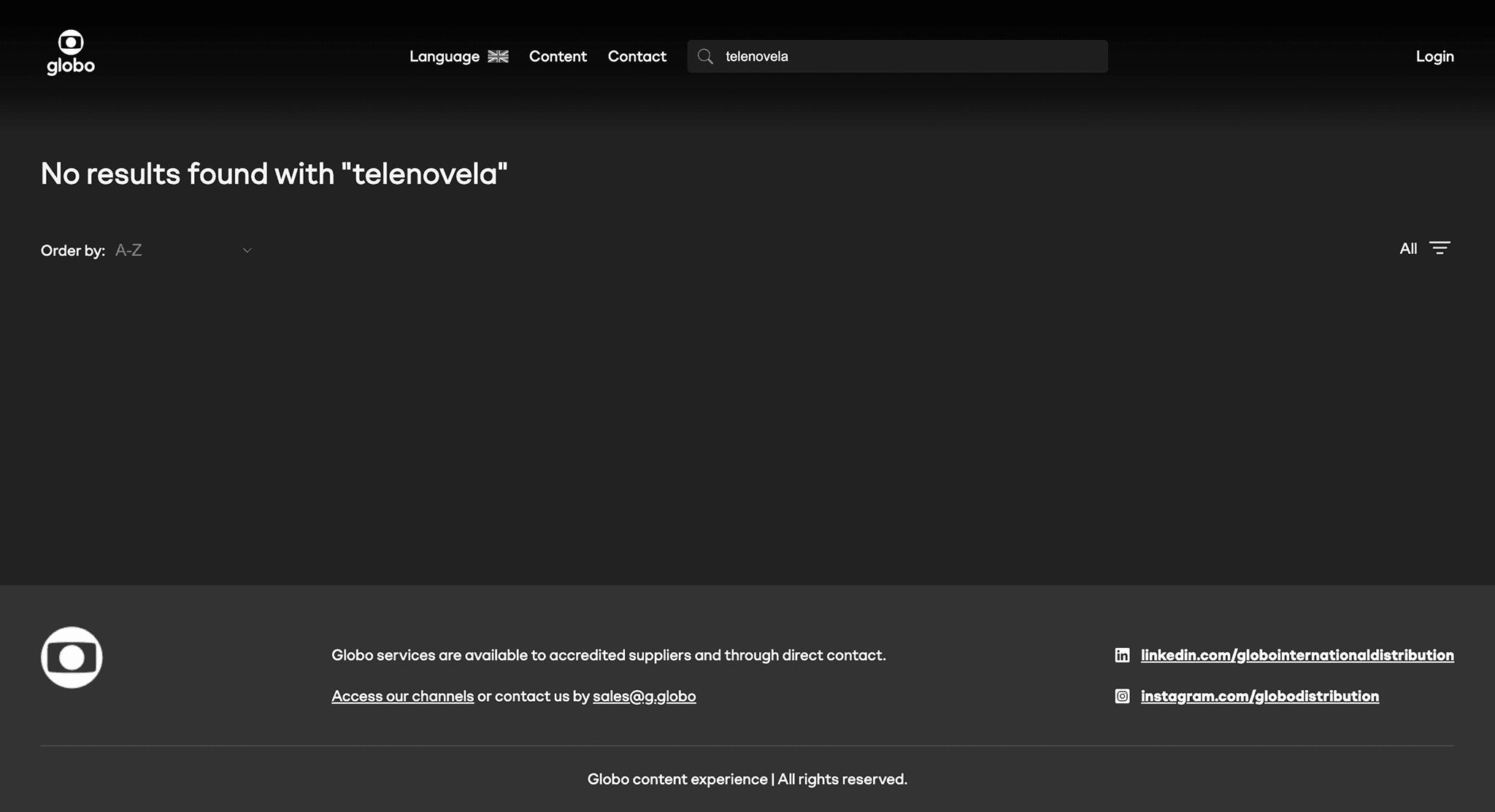
Before: no results
The numbers backed the diagnosis. Industry research (Forrester, Baymard) shows users who engage with search convert 2–4× more than those who don't, and 88% of users don't return after a poor search experience. Only 31% of platforms correct errors before search fails. Screening was in the 69% that didn't.
The decision: reframe search from a utility into a commercial surface.
A B2B catalog isn't a Google clone. The user isn't trying to find one thing — they're trying to discover content worth licensing. The search interface had to do three jobs at once: help users find what they came for, surface what they didn't know to ask for, and recover gracefully when intent didn't match the catalog's internal taxonomy.
That reframing led to three design layers, each solving a different job.
Layer 1 — Entry point
The existing search bar was a small, low-contrast input in the header. Structurally, it couldn't support dropdown interactions — even if the engine improved, the surface couldn't carry the experience.
The new entry point: a dynamic icon that expands into a full-screen centered overlay on click. High visibility, focused state, room for richer behavior.
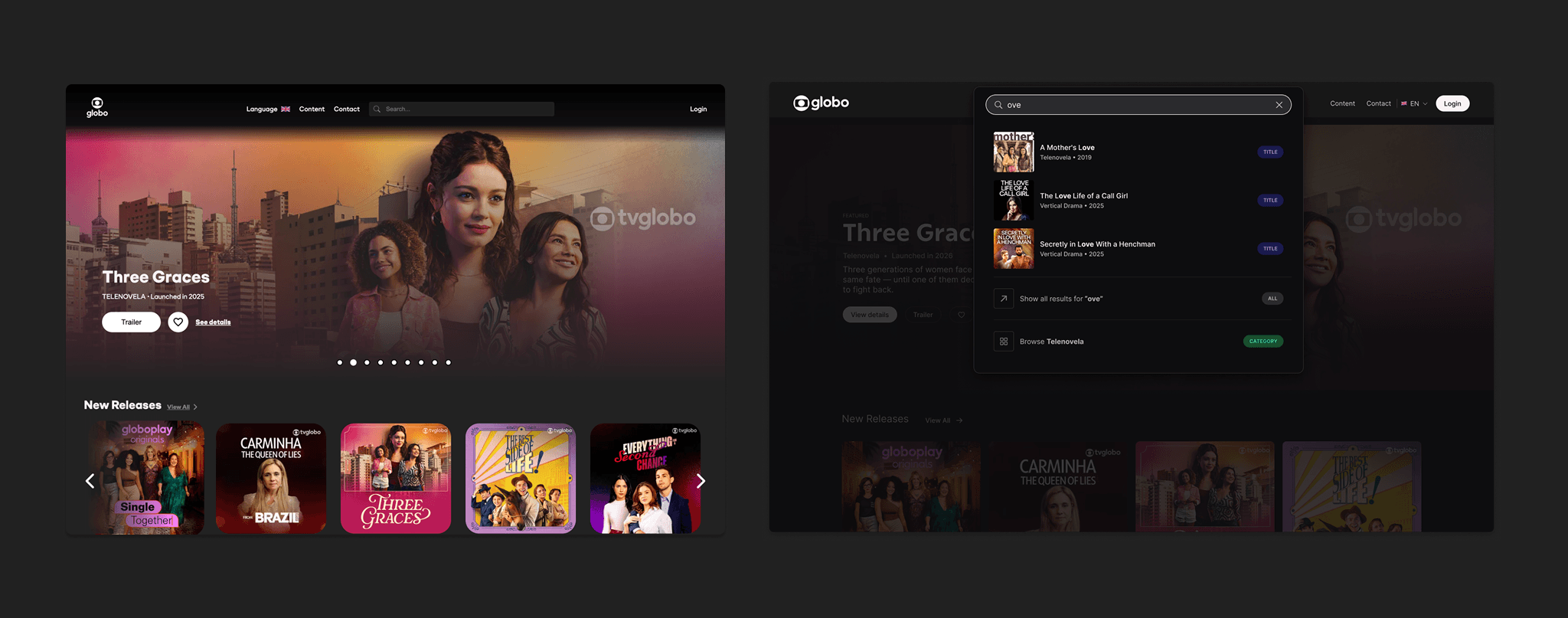
Before: no results
Layer 2 — Discovery hub
The hub activates the moment the search field opens — before any input.
It surfaces trending titles, most-licensed content, and editorially curated picks, each as a rich card with the metadata that matters to licensing executives: format, year, episode count, duration, rights status.
This turns search from a reactive utility into a proactive commercial channel. A buyer can discover a title they weren't seeking before typing a character. Every card is a potential conversation starter.
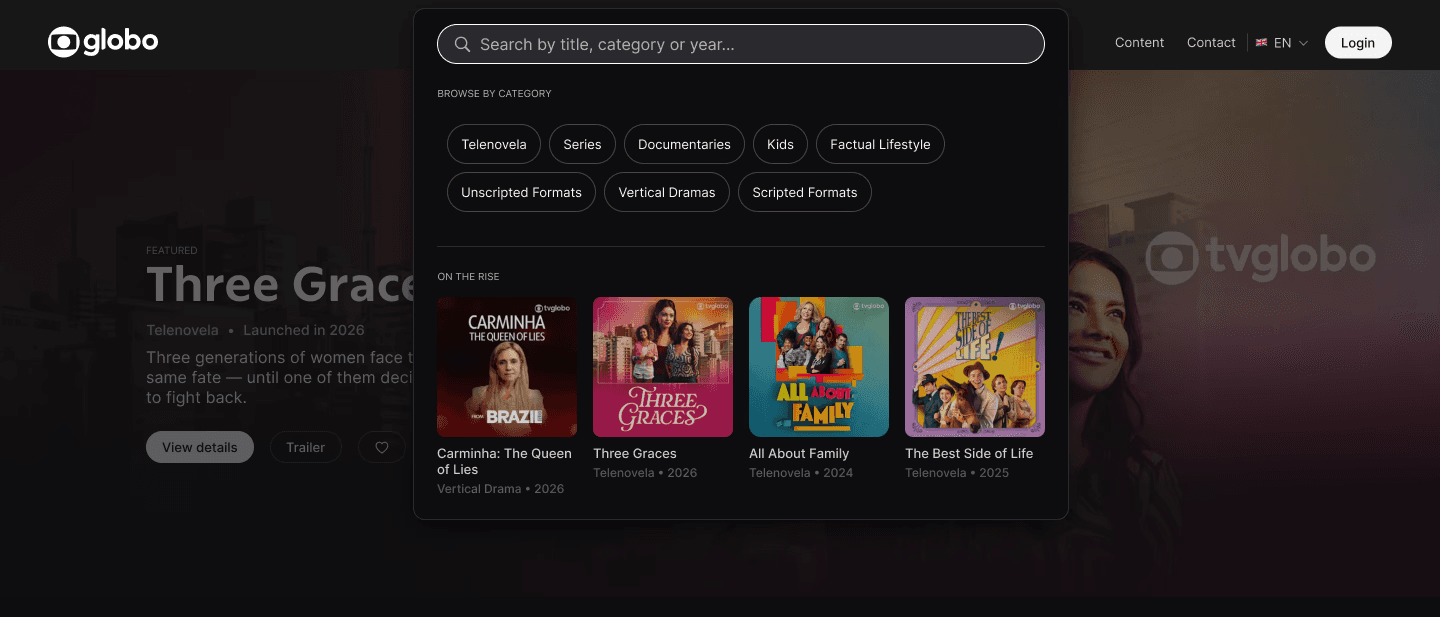
After: The discovery HUB
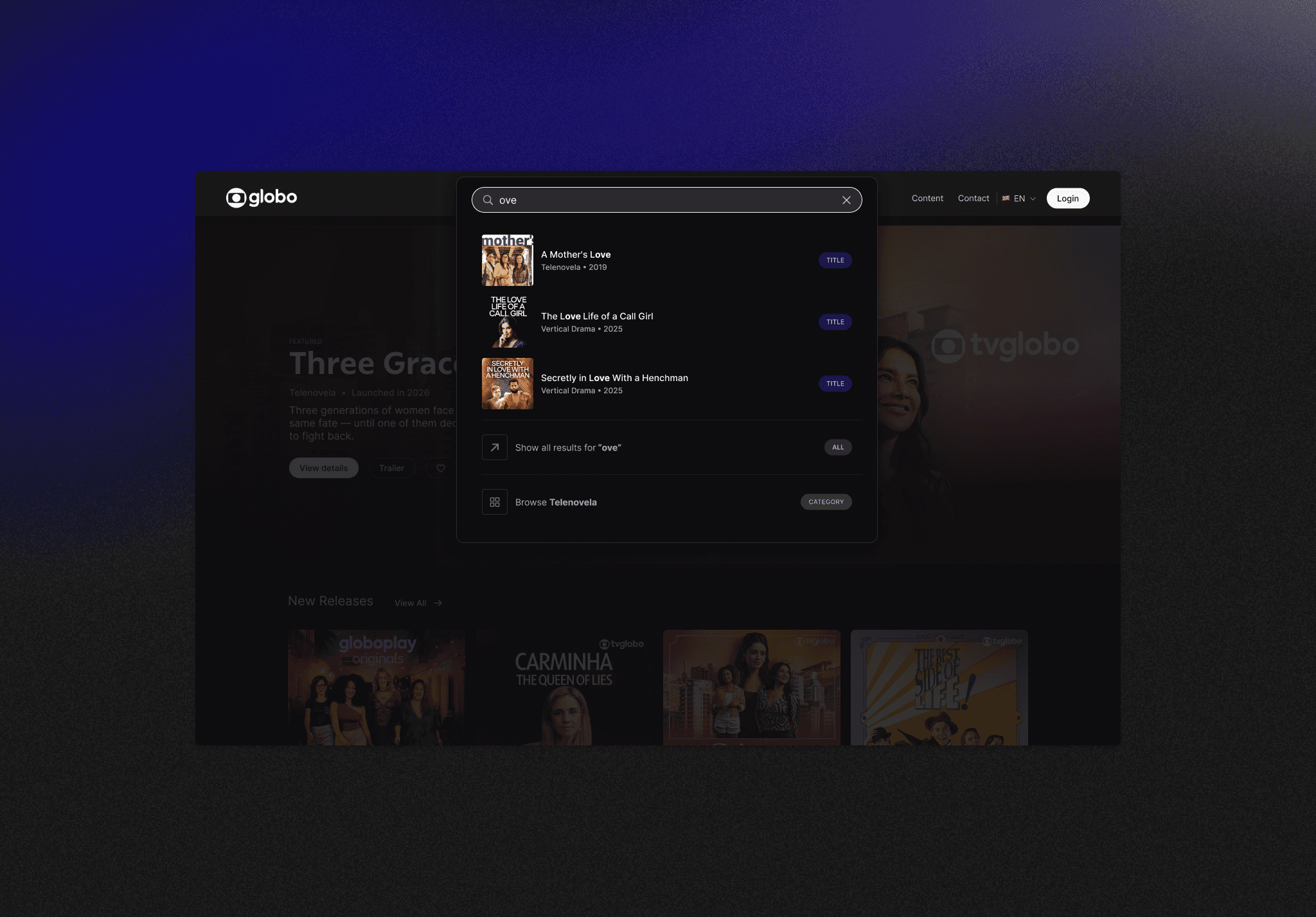
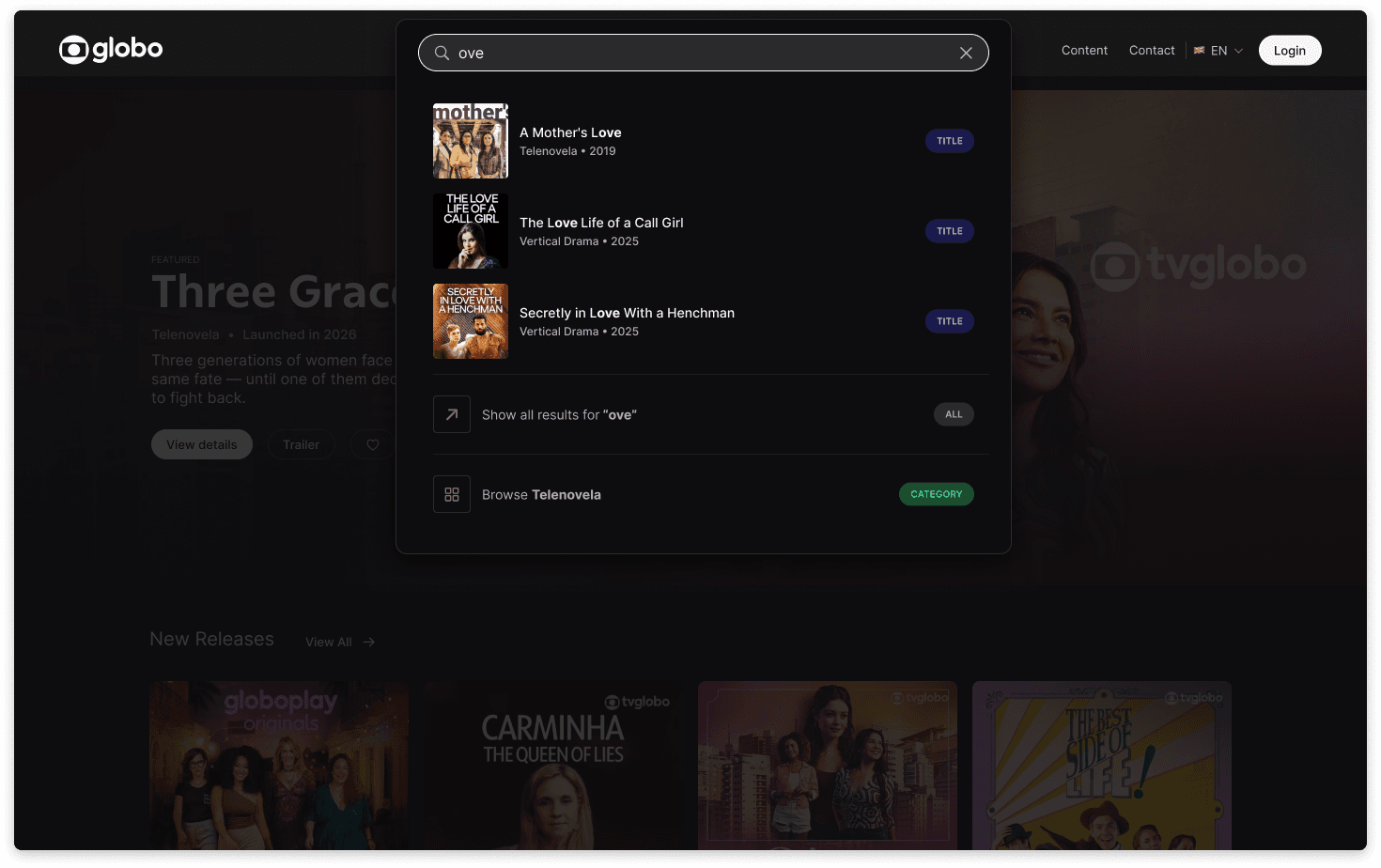
Layer 3 — Semantic search
The core technical proposal: move from exact string matching to semantic understanding.
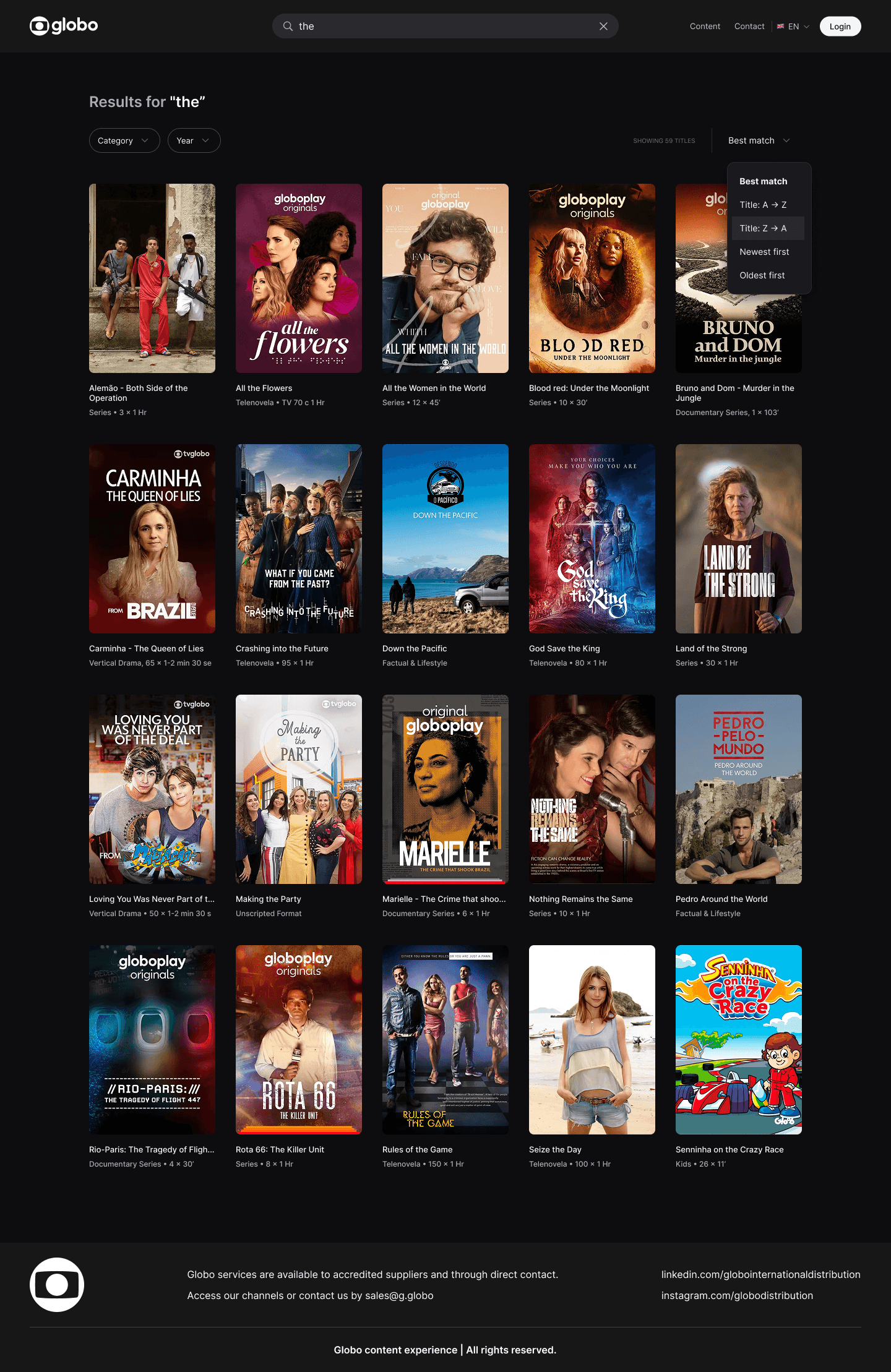
"Telenovela" → returns Novelas
"TV Shows" → returns Series
"Drama" → surfaces the full dramatic content library
Actor or director name → returns all related productions with full licensing metadata
After: semantic search in action
The shift required engineering investment in vector search and intent modeling, plus tolerance for typos and synonyms. I worked with the dev lead to scope this as a phased rollout — exact-match improvements first, semantic layer second — so commercial users felt improvement immediately while the deeper work shipped behind it.
Impact
Zero-result rate — 85% → 17%
Top terms that now return results — Telenovela, TV Shows, Drama, Soap Opera
Reflection
A B2B catalog isn't a Google clone. The job isn't to match strings — it's to make commercial conversations happen.
The most useful thing UX can do for a platform like Screening is hold space for both kinds of users: the executive who knows exactly what they're looking for, and the one who's open to being shown something they didn't ask for.
Search is where both meet.
YEAR
2026
COMPANY
Globo
ROLE
Senior Product Designer
CATEGORY
UI/UX
01
02
03
see also